

Salary & Statutory Compliance in India: Key Labour Law Changes Every Employer Should Know (2026)
The Labour Codes are in force, central rules are notified, and enforcement is going digital. A 2026 field guide to PF, ESI, PT, minimum wages, bonus, gratuity and payroll compliance.

The Indian labour law landscape is evolving fast as governments move towards greater digitisation, employee protection and simplified compliance. Whether you're an Indian employer, a global company hiring through an Employer of Record (EOR), or an HR professional managing payroll, staying compliant is no longer optional.
Here's a comprehensive overview of the latest developments affecting salary processing and statutory compliance in India.
1. Labour Codes — now in force; state alignment still under way
India has consolidated 29 central labour laws into four Labour Codes: the Code on Wages, 2019; the Industrial Relations Code, 2020; the Code on Social Security, 2020; and the Occupational Safety, Health and Working Conditions Code, 2020.
The codes were brought into force with effect from 21 November 2025, and the Central Government notified the final central rules in May 2026. State-level rules, however, remain uneven — several states have finalised theirs while others are still at the draft stage, and certain provisions that depend on further notifications (thresholds, ceilings and sector specifics) are still being operationalised. In short: the framework is live, the transition is not finished — and preparation cannot wait.
- Review salary structures against the new definition of wages
- Refresh employment contracts and HR policies
- Re-check leave policies and payroll software configuration
- Validate statutory deduction processes end to end
2. The new definition of "wages" will change salary structures
One of the biggest changes is the standardised definition of wages. Many employers have historically kept basic salary relatively low and loaded the CTC with allowances to minimise statutory contributions. Under the codes, basic wage plus dearness allowance should generally constitute at least 50% of total remuneration — and excess allowances beyond that line are reclassified as wages.
This can increase Provident Fund contributions, gratuity liability, bonus calculations, leave encashment, overtime and retrenchment compensation. For many employers, employee take-home pay may reduce while employer statutory costs increase.
3. Provident Fund compliance continues to tighten
The EPFO keeps strengthening digital compliance. Employers should ensure Universal Account Numbers are activated, Aadhaar and PAN are linked, monthly ECR filings are accurate, exit dates are updated promptly and KYC details are verified. Late PF payments continue to attract interest under Section 7Q and damages under Section 14B — and digital verification has sharply reduced the room for post-filing corrections.
4. ESI compliance is becoming data-driven
The ESIC increasingly cross-verifies payroll records, employee registers, contribution history and inspection reports. Common issues include incorrect eligibility, wrong wage calculations, delayed registration and contribution mismatches. Regular payroll audits are the practical defence.
5. Professional Tax still varies by state
Professional Tax remains a state-specific compliance, with online registration, digital return filing and automated notices for delayed payments now the norm. Companies operating across multiple states should monitor each state's thresholds and filing schedules separately.
6. Minimum wages are revised frequently
State governments revise minimum wages based on skill category, industry, zone and cost of living — and many revise them every six months through Variable Dearness Allowance. Don't rely on annual updates: failure to revise salaries accordingly can trigger inspections, recovery proceedings and penalties.
7. Bonus eligibility and payment
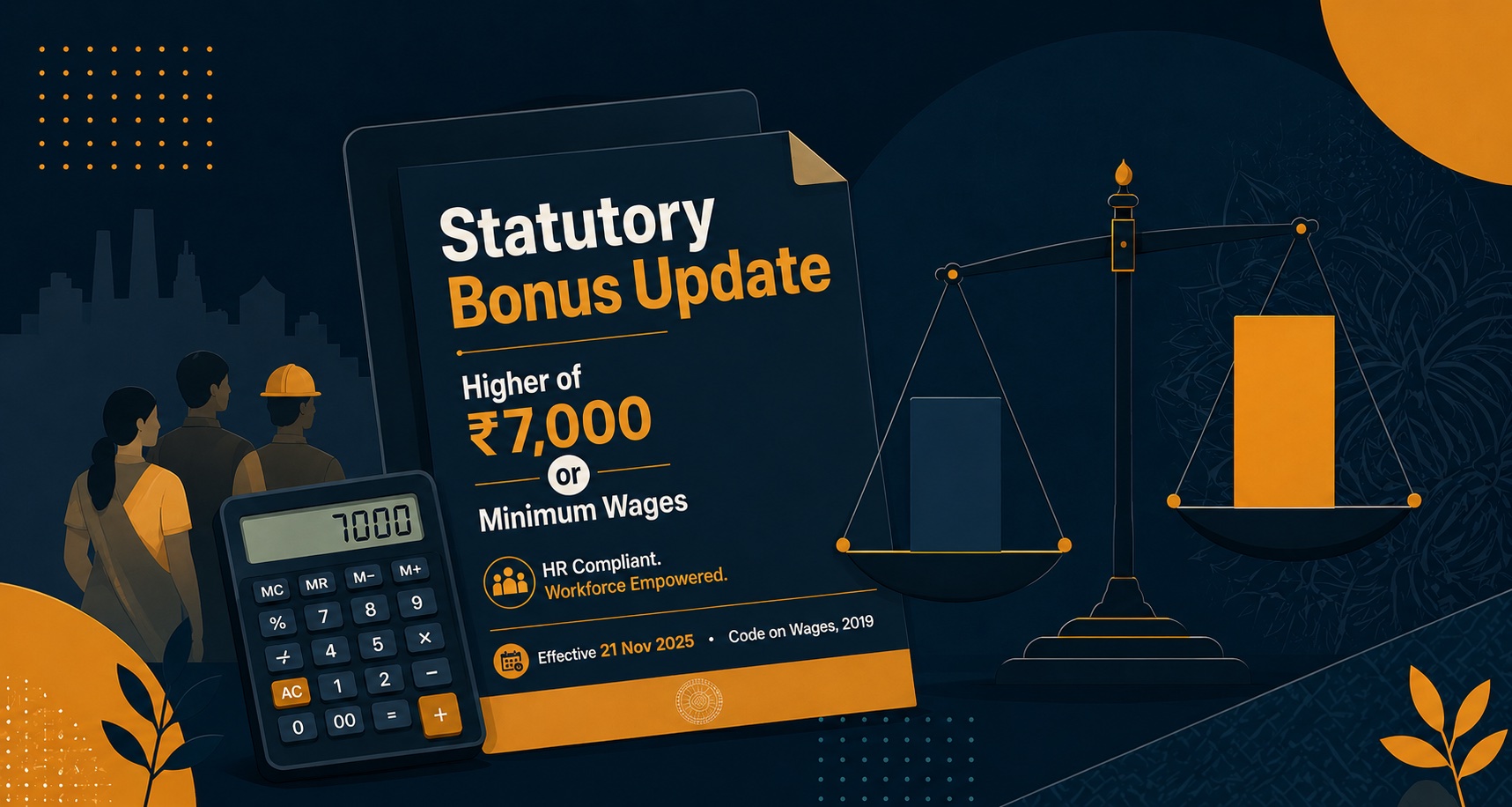
Statutory bonus obligations continue for eligible establishments: a minimum bonus of 8.33%, a maximum of 20%, eligibility based on notified wage thresholds, and timely payment after the financial year closes. Maintain proper bonus calculation records for inspections.
8. Gratuity needs greater attention
Gratuity liability keeps growing as retention improves, salaries rise, and the new wage definition feeds into the calculation. Maintain gratuity provisions, track continuous service, keep nominations updated and settle within statutory timelines.
9. Digital payroll records are becoming essential
Labour authorities increasingly expect digital records: electronic payslips, payroll registers, attendance and leave records, statutory deduction reports and audit logs. Cloud HRMS platforms make this dramatically easier than spreadsheets.
10. TDS and payroll integration
Payroll compliance extends beyond salary maths: correct tax-regime selection, accurate monthly TDS deduction, timely deposit, quarterly Form 24Q filing and Form 16 issuance. Payroll errors are a common trigger for tax notices — for employers and employees alike.
11. Gig and platform workers
The Code on Social Security formally recognises gig and platform workers. Several operational provisions — including aggregator contributions — are still being notified, so businesses engaging freelancers at scale should monitor contribution requirements as they firm up.
12. Payroll audits are moving up the agenda
Organisations are increasingly running internal payroll compliance audits across PF, ESI, PT, Labour Welfare Fund, minimum wages, salary structures, leave encashment, gratuity provisioning and payroll taxation. Regular audits surface gaps before a regulator does.
Best practices for employers
- Review salary structures annually against the wage definition
- Monitor state-specific labour notifications
- Conduct periodic payroll compliance audits
- Automate payroll calculations wherever possible
- Maintain accurate, digital employee records
- Pay statutory dues before due dates
- Keep HR policies aligned with evolving regulations
- Train HR and payroll teams on legislative updates
Final thoughts
India's payroll and labour compliance environment is becoming more digital, transparent and enforcement-driven. With the codes in force and rules landing state by state, employers who proactively restructure salaries, automate statutory compliance and maintain accurate payroll records will adapt at far lower cost than those who wait.
Rates, thresholds and state rules change frequently — confirm the current position for your states before acting, or let your EOR or payroll partner keep them current for you.